
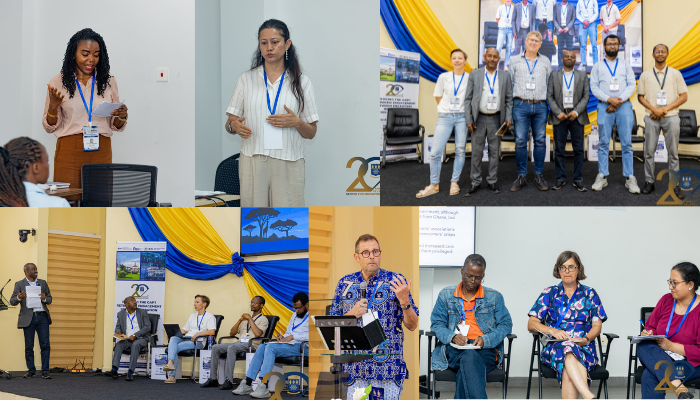
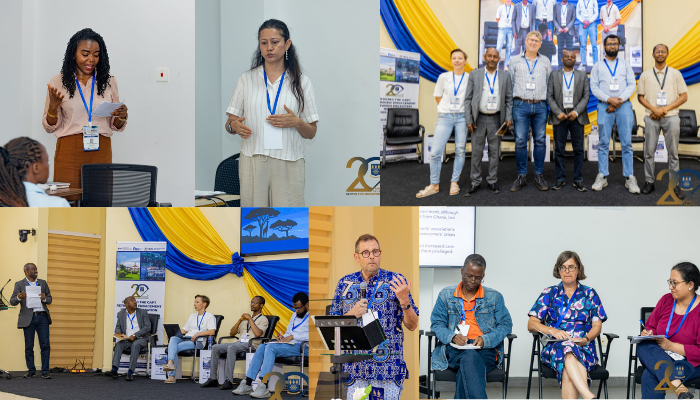
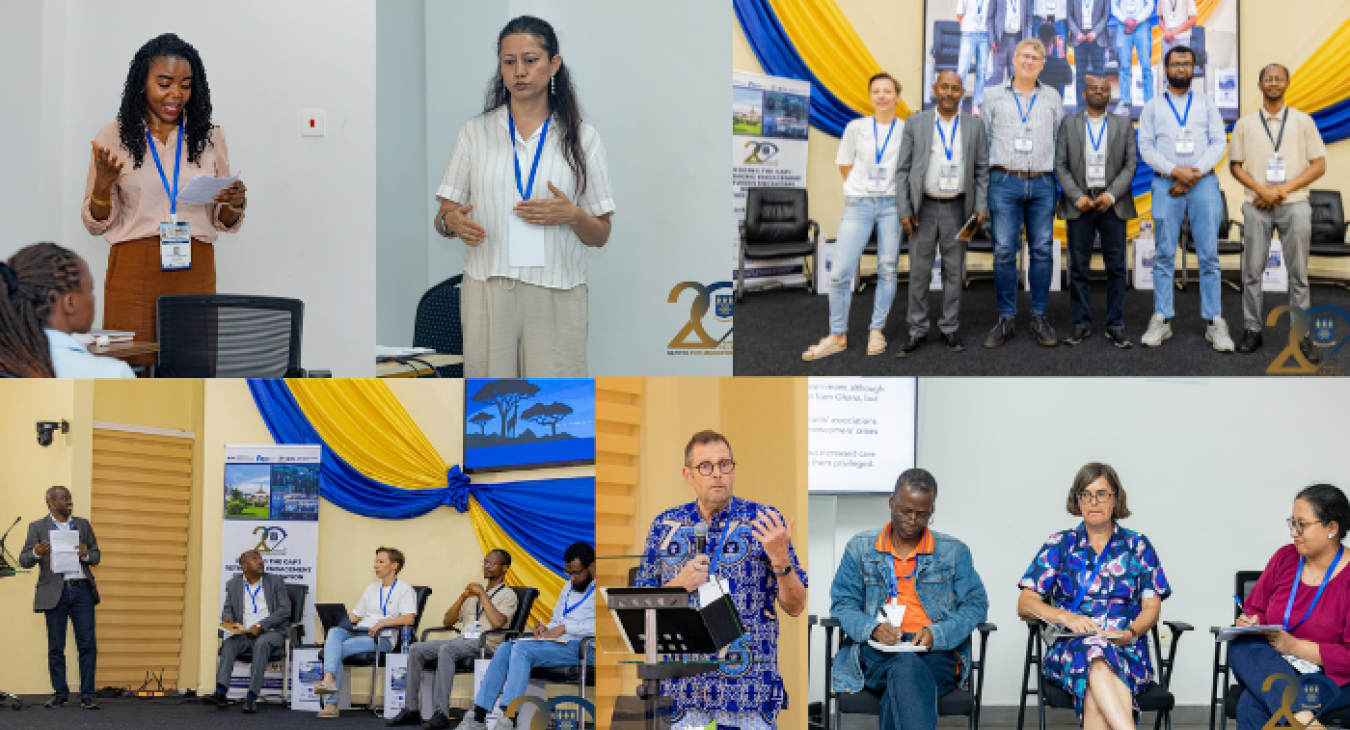
Scholars from across Africa, Europe and North America examined how migration research can better inform policymaking and practice during parallel sessions at the CMS@20 International Conference, hosted by the Centre for Migration Studies at the University of Ghana and supported by the IDRC Research Chair on Forced Displacement in Anglophone West Africa and the European University Institute.
Held under the theme “Bridging the Gap? Rethinking Engagement between Migration Research, Policies and Practices,” the sessions explored how knowledge on migration is produced, whose perspectives shape policy debates, and how research evidence can be translated into practical governance solutions.
Across the two-day conference, researchers presented studies examining migration governance, climate mobility, forced displacement, migrant rights, urbanisation and the politics of knowledge production.
Rethinking Knowledge Production in Migration Research
Several presentations examined the structural gaps that shape global migration knowledge and the limited representation of African perspectives in research and policy discourse.
Damian Omondi Otieno presented research highlighting the need to recognise the expertise of migrants and frontline humanitarian practitioners in migration research. Drawing on work by the Red Cross Red Crescent Global Migration Lab in Kenya, he demonstrated how incorporating migrants’ lived experiences into research processes can strengthen humanitarian responses and improve policy relevance.
Similarly, Amos Kipkorir Langat proposed an African-Centred Migration Knowledge System, arguing that migration research on Africa has historically been shaped by externally driven theoretical frameworks and research agendas.
His paper called for a shift toward epistemic sovereignty in which African scholars, policymakers and communities collaborate as co-producers of migration knowledge, strengthening the connection between research evidence and governance needs.
Addressing similar concerns, Michel Debruyne argued for what he described as a “level telling field” in migration research and policy. His study examined how dominant narratives about migration in Europe often shape policies affecting countries of origin, stressing the need for equitable partnerships between researchers, migrants and policymakers.
Questions of epistemic justice were further explored by Anastasia Nkhalamba, who critically examined debates on reflexivity and the decolonisation of migration studies. Her research argued that while reflexivity can help expose structural inequalities in knowledge production, deeper institutional reforms are required to address the power hierarchies shaping global migration scholarship.
Similarly, Samuel Umoh Uwem analysed how academic publishing systems can reproduce epistemic inequalities that marginalise African scholars and indigenous knowledge systems within global migration research.
Linking Research Evidence to Policy and Governance
Several studies presented at the conference examined the relationship between migration research and policymaking across different governance contexts.
Juliette Tolay explored how countries in West Africa, Latin America and Turkey use migration diplomacy as a strategic tool in foreign policy. Her research challenged assumptions that Global South states are passive actors in migration governance, showing instead how regional cooperation can reshape migration narratives and diplomatic engagement.
Meanwhile, Olalekan Moyosore Lalude examined the human rights implications of externalised migration control regimes. His study analysed gaps in international legal frameworks that allow states to evade responsibility for migration governance practices beyond their borders.
A study by Joseph Musa Batet examined Nigeria’s national campaign against migrant smuggling, analysing how public awareness initiatives translate migration policies into community-level action. The research highlighted the importance of collaboration between government agencies, communities and local stakeholders in addressing irregular migration.
Research by Emmanuel Quarshie, Mary Boatemaa Setrana, Joseph Mensah, Kingsley Laar, Albert Duodu and Emmanuel Ansah Otabil examined the global visibility of African migration scholarship. Their study highlighted structural barriers such as funding inequalities, donor-driven research agendas and data fragmentation that limit the influence of African scholars in global migration debates.
Centring Migrants’ Lived Experiences
Other presentations focused on migrants’ everyday experiences and how these realities often remain disconnected from policy frameworks.
Shantell Gavhure explored how Zimbabwean migrants in Cape Town navigate urban life by building social networks, engaging in informal work and adapting to complex legal environments.
Her research demonstrated how migrants actively reshape cities through everyday practices, challenging narratives that portray migrants as passive victims or social burdens.
Ashika Niraula examined how prospective African skilled migrants imagine Canada as a destination. Through interviews with aspiring migrants, the study revealed how migration decisions are shaped by aspirations, digital information networks and social connections.
Research by Cati Coe examined the experiences of ageing migrants navigating pension systems between Canada and Ghana. Her study showed how social welfare policies can inadvertently create patterns of ongoing mobility among older migrants who wish to retire in their home countries.
Migration, Climate Change and Environmental Mobility
Climate change and environmental mobility emerged as another major theme in the conference discussions.
Emmanuel Otabil presented research on climate immobility in coastal Ghana, examining why communities remain in areas exposed to rising sea levels and coastal erosion. His findings highlighted how economic constraints, cultural attachments to land and limited relocation options influence decisions to remain in hazard-prone areas.
Similarly, Hamissou Saminou Harouna examined migration-driven urbanisation in West Africa, identifying significant gaps in how migration dynamics are integrated into urban planning and climate policy.
Meanwhile, Eleonora Milazzo and Anna Rosinska analysed how media narratives frame climate-related migration in African countries, warning that simplified crisis narratives may distort public understanding and undermine evidence-based policymaking.
Migration, Gender and Displacement
Several presentations also addressed gender, labour migration and forced displacement.
Richa Shivakoti examined the impacts of Ghana’s migration ban on women domestic workers seeking employment abroad. Her study suggested that restrictive migration policies may increase vulnerability by pushing migration processes into informal and less regulated channels.
Research by Mary B. Setrana, Thomas Yeboah, Johnson Wilson Appiah Kubi and Gifty Sarkodie Amponsah examined perceptions and experiences of gender-based violence among displaced populations in Ghana, Nigeria and Sierra Leone.
Their findings indicated that experiences of safety and vulnerability in displacement contexts are shaped by broader social and economic factors, including awareness of rights, local governance structures and community support systems.
Other studies examined migration and displacement in fragile contexts.
Adam Babekir analysed the displacement crisis in Sudan, identifying knowledge gaps that hinder effective policy responses for internally displaced persons and refugees.
Similarly, Abebaw Minaye Gezie presented findings from migrant response centres along Ethiopia’s borders, highlighting both the humanitarian assistance provided to vulnerable migrants and the operational challenges affecting the sustainability of such interventions.
Migration Systems, Mobility and Future Research
Additional presentations explored broader migration dynamics across Africa and beyond.
Elvino Zacarias Nhantumbo used advanced statistical modelling to examine patterns of migration intensity, efficiency and spatial redistribution across Africa, challenging assumptions that poverty alone drives migration.
Abera Tibebu Mengistu examined how mobility restrictions affecting pastoralist communities in Ethiopia are reshaping migration patterns among youth, sometimes pushing them toward irregular migration routes.
Finally, Juhar Yasin Abamosa examined the marginalisation of African migrants and scholars in knowledge production in Western institutions, proposing the mainstreaming of Black consciousness as a way to address structural inequities in research environments.
Advancing Dialogue Between Research, Policy and Practice
Taken together, the presentations reflected the core aim of the CMS@20 conference: strengthening engagement between migration research, policy frameworks and real-world practice.
The discussions underscored the importance of African-centred scholarship, inclusive knowledge production and stronger collaboration between researchers, policymakers and communities in shaping migration governance.
The conference highlighted the growing role of the Centre for Migration Studies as a leading hub for migration research, training and policy engagement in Africa by bringing together diverse perspectives and new research evidence.
- Log in to post comments